AI Fluency
Your agent knows your calendar. It doesn’t know your clock.
Your agent books your day by open slots, not your body clock. How I measured my frog window, gave it one home, and had my agent flag collisions, not fix them.
At a Glance
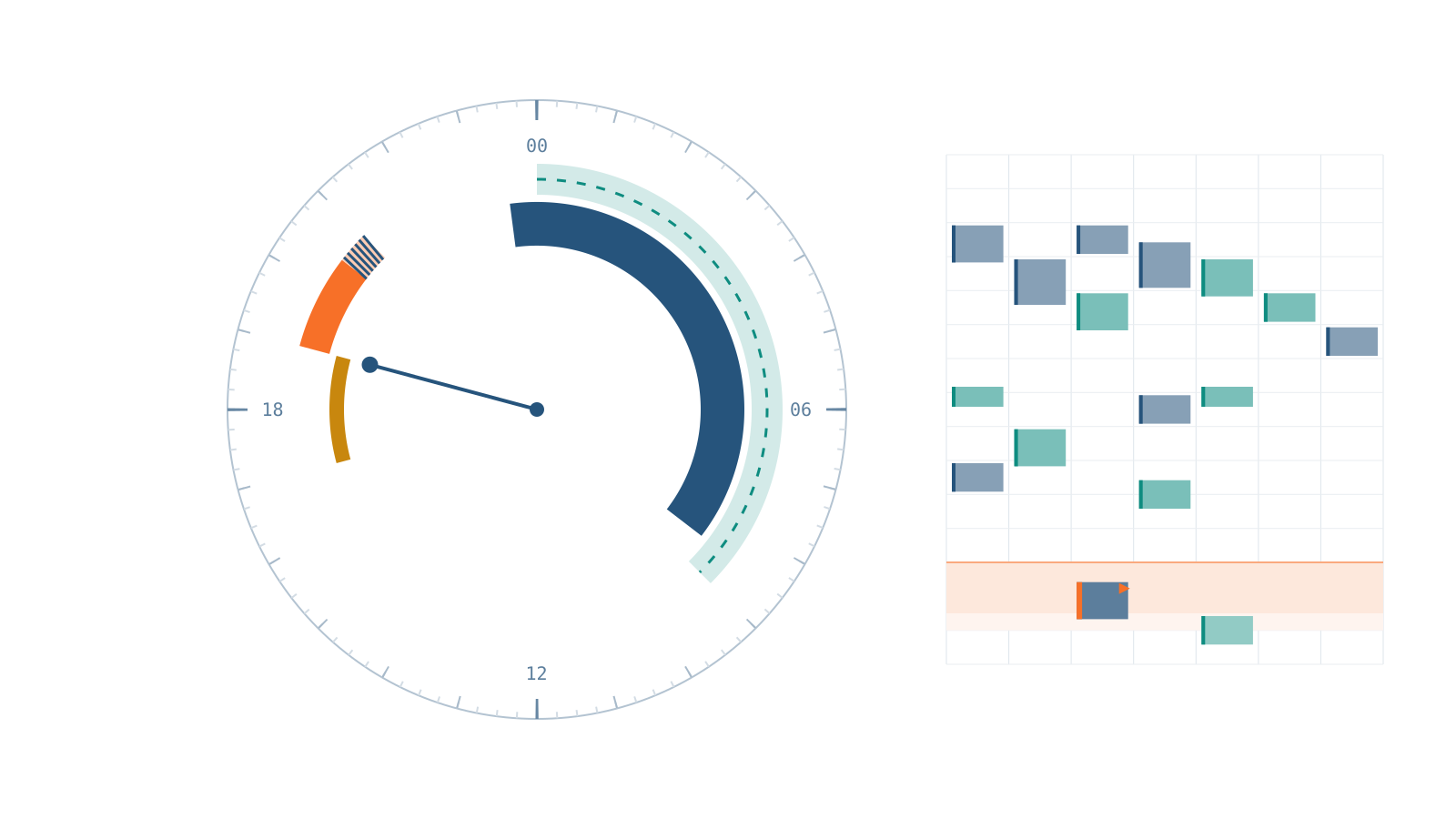
Your AI agent schedules by open slots. It can’t see chronotype, social jetlag, or the two hours a day your brain can carry the hard thing. I ran two published sleep-research instruments on myself, got a “frog window” of 19:00–21:00 Pacific, and wired it into the agent that briefs me every weekday at 07:00. The agent flags anything booked into that window. It doesn’t fix it. I decide. That split is the whole point.
Key Takeaways
- An agent that optimizes your calendar sees gaps, conflicts and meeting density. It can’t see when your body actually runs.
- Two instruments close that gap: the Morningness-Eveningness Questionnaire (Horne and Östberg, 1976) reads what your clock prefers, and the µMCTQ (Ghotbi et al., 2020) reads when you actually sleep. The gap between workday and free-day sleep is social jetlag (Wittmann et al., 2006).
- My frog window measured 19:00–21:00 Pacific, with about 30 minutes of social jetlag. The survey was still wrong about me twice, and I corrected it.
- Give the window exactly one home, with its source attached. A flag raised against a window nobody can attribute is worse than no flag.
- Your move: have your agent flag, not fix, anything booked into your window for one week, then count the flags on Friday.
Every weekday at 07:00 Pacific, an agent reads my calendar before I do. It builds a two-week grid, finds the clashes, finds the deadlines with no prep in front of them, and emails me the lot. As of September 23, 2026, it also checks one more thing: whether anything’s been booked into the two hours my body does its best work.
Until that morning, those two hours lived inside the agent’s prompt as a hardcoded value. I took them out. Here’s why that matters more than it sounds.
Take the Body Clock Audit: thefrontierfounder.com/tools/body-clock-audit#architecture
Why does your agent book your hardest work at the worst time?
Because it can’t see anything else.
A calendar is a grid of slots. An agent optimizing that grid sees gaps, conflicts and meeting density. It’ll find you a clean two-hour block with real skill. What it can’t know is whether that block lands when you’re sharp or when you’re running on fumes and caffeine.
So it books your board prep at 09:00 because 09:00 was open. Efficiently. Without complaint. And wrong for about half the people reading this.
The standard advice doesn’t help. “Eat the frog first thing” assumes your first thing is your best thing. For morning types it is. For the rest of us it’s a productivity rule written by people whose biology happened to match the clock on the office wall.
What does your body clock actually say?
I stopped guessing and measured, with the Body Clock Audit. It runs both instruments in one pass, takes about ten minutes, and your answers never leave your browser.
Two instruments do most of the work here. The Morningness-Eveningness Questionnaire goes back to Horne and Östberg in 1976, and it reads what your internal clock prefers. The µMCTQ, a short version of the Munich ChronoType Questionnaire from Roenneberg’s group (Ghotbi et al., 2020), reads when you actually sleep on workdays versus free days. The gap between those two sleep patterns has a name: social jetlag (Wittmann et al., 2006). It’s the time zone you fly every week without leaving town.
Mine came back like this:
- Social jetlag: about 30 minutes. Small. My workdays and free days mostly agree.
- Frog window: 19:00–21:00 Pacific.
That second number is the one that stopped me. The frog window is the overlap of two MEQ answers: when you’d schedule a mentally brutal two-hour test, and when you feel your best. Mine isn’t in the morning. It isn’t close to the morning. My best two hours start when most people are clearing dinner plates.
I work in 75-minute blocks with 15 minutes of recovery, an ultradian structure I’ve adapted from Ultradian Partners’ method. Kleitman called the underlying pattern the basic rest-activity cycle decades ago. None of that is new science. What was new was knowing exactly where my hardest block belonged, with a source attached.
Where should the frog window live?
In one place. Only one. Call it another frame on the tape, the memory your agent reads before you sit down.
When I first built the morning brief, I typed the window straight into the agent’s instructions. It worked. It also meant the rule had two homes: my survey results and a paragraph in a prompt. The day I retook the audit, those two homes would drift apart, and nobody would notice until the agent started flagging against a number that wasn’t true anymore.
So the window moved into a config file. The agent reads ultradian.frogWindow fresh every morning. It also has to print curveSource in the footer, so I can see where the number came from and how old it is.
And if the config doesn’t have the key, the agent skips the check entirely. It’s not allowed to fall back on a remembered value. I wrote that rule deliberately, and it’s the line I’d keep if I had to cut everything else:
A flag raised against a window nobody can attribute is worse than no flag.
I spent 22 years building compliance systems where every value had to say where it came from. That discipline doesn’t stop at audit evidence. It applies to your own body the moment you hand it to software.
What happens when the survey is wrong about you?
It will be. Mine was, twice.
The survey recorded my work blocks running until 22:00. They don’t. My day ends at 20:30, and that’s a correction I made, not the instrument. Which means my frog window, 19:00 to 21:00, runs half an hour past the end of my actual workday.
I had three options. Shrink the window. Slide it earlier. Or leave it alone and let evening commitments eat the tail on purpose.
I took the third. The last half hour belongs to whatever the evening holds. A class, a community session, a conversation that matters more than a work block. The window stays honest about what my body can do. My life gets to decide what I do with it.
The second miss was quieter. The survey never asked when I eat. My last real meal lands between 17:00 and 19:00, right up against the window. That’s a body constraint, not a scheduling preference, and it belongs in the instrument. Every questionnaire measures what it was built to measure. The part it wasn’t built for is still yours to carry.
That’s the release-owner job. The instrument gives you a number. The agent enforces it. You’re the one who knows where both are wrong.
Why flag instead of fix?
Because some collisions are the point.
When my morning agent finds something inside the frog window, it marks the chip, names it in the needs-attention callout and leads with it if it lands today or tomorrow. It doesn’t move anything. It doesn’t decline anything. And it counts these separately from real clashes, so one deliberate evening class doesn’t make my week look like a disaster.
An agent that silently protected my frog window would have quietly cancelled the things I chose to put there. That’s not help. That’s a second person running my calendar with worse information than I have.
It’s a flag, not an error. I make the call.
What should you do before Friday?
Four steps. You’ll know by the end of the week whether your calendar has been working against you.
- Measure. Run both instruments in the Body Clock Audit. Get your frog window and your social jetlag as numbers, with sources.
- Correct. Read the results against your real week. Where the survey’s wrong about you, fix it and write down why.
- Give it one home. Put the window somewhere your agent or assistant reads fresh every day, not pasted into a prompt you’ll forget to update.
- Flag for a week. Have the agent flag anything booked inside the window. Change nothing. On Friday, count the flags.
If the count is zero, your calendar and your clock already agree. Congratulations, you’re rarer than you think. If it isn’t, you now have a number for what your schedule has been costing you, and a source for every piece of it.
Your agent is going to keep booking your day either way. The only question is whether it knows when you run.
Find your frog window: thefrontierfounder.com/tools/body-clock-audit#architecture
Read the full AI Fluency for Founders series →
One honest caveat
This is a self-check, not medical advice. The instruments describe your chronotype. They don’t diagnose anything, and if your sleep is genuinely broken, a questionnaire and a config file aren’t the fix.
Frequently asked questions
What is a frog window?
It’s the two hours where your best time for a mentally exhausting task overlaps with the time of day you feel your best, read from two items on the Morningness-Eveningness Questionnaire. It’s a Frontier Founder scheduling rule, not part of either published instrument.
What is social jetlag?
Social jetlag is the gap between when your body sleeps on free days and when your schedule makes it sleep on workdays. Wittmann and colleagues named it in 2006. The µMCTQ measures it from four questions about when you fall asleep and wake up.
Why should my agent flag collisions instead of rescheduling them?
Because some collisions are deliberate. An evening class or a community session can matter more than a work block. An agent that silently protected your window would cancel the things you chose to put there. A flag keeps the decision with you.
What if the questionnaire gets me wrong?
It will, somewhere. Mine recorded my workday running to 22:00 when it ends at 20:30, and it never asked about meal timing. Read the results against your real week, correct them, and write down why.
How do I give my agent my body clock?
Put the window in one file your agent reads fresh every day, with the source and date attached. Don’t paste it into a prompt. Have the agent skip the check if the value is missing rather than fall back on a remembered one.
Sources: Horne & Östberg (1976); Terman et al., MEQ-SA (2019); Ghotbi et al. (2020); Wittmann et al. (2006); Kleitman (1982); Moulton, The Ultradian Method (2026), Ultradian Partners.